Disease & Insect Treatment
An Ounce of Prevention...
...is worth a pound of cure
- Our Plant Healthcare Program typically involves 4 visits to proactively address a number of tree & shrub diseases and insect infestations. Antifungal treatments need to be applied early in the season to be successful.
- Fertilization can also help to support the vigor of your shrubs.
- Our arborist is available for a complimentary evaluation of your trees to help diagnose other conditions that may impact your trees.
A note on Boxwoods…
Boxwoods can be a beautiful staple of your evergreen landscape. However, Boxwoods are susceptible to a variety of insects and other pathogens. In addition, boxwood blight, a fungal disease, has been ravaging boxwoods in our area since 2011. Keeping these shrubs healthy and vigorous with our plant healthcare program, fertilization and horticultural pruning is key to helping these shrubs to resist boxwood blight.
Our arborist is available for a complimentary evaluation of your trees, shrubs and lawn.
Why Are Ash Trees Dying?
The EMERALD ASH BORER
- The Emerald Ash Borer arrived in the Detroit area in packaging material from Asia.
- First identified in Detroit 2002.
- They are good flyers and have now been seen in 35 states and Canada.
- Expected to kill the ~8.7 billion Ash trees in America (~10% of our canopy of trees)
- They have killed hundreds of millions of ash trees in North America and have cost many hundreds of millions of dollars.
- First seen in NJ in 2014 in Bridgewater, by late 2018 they have been found in Bergen, Burlington, Camden, Essex, Hudson, Hunterdon, Mercer, Middlesex, Monmouth, Morris, Somerset, Sussex and Warren counties.
- NEARLY ALL UNPROTECTED ASH TREES WILL PERISH. “Over the next few years, 99% of NJ ash trees will die due to emerald ash borer infestations.” Mountain Ash trees are not susceptible at this time.
Treatment:
- While there are a number of treatment regiment, one of the most effective is to inject the tree with a treatment that travels up through the trees vascular system and kills the borer. Its important to treat the trees while they are strong.
How do the borers kill trees?
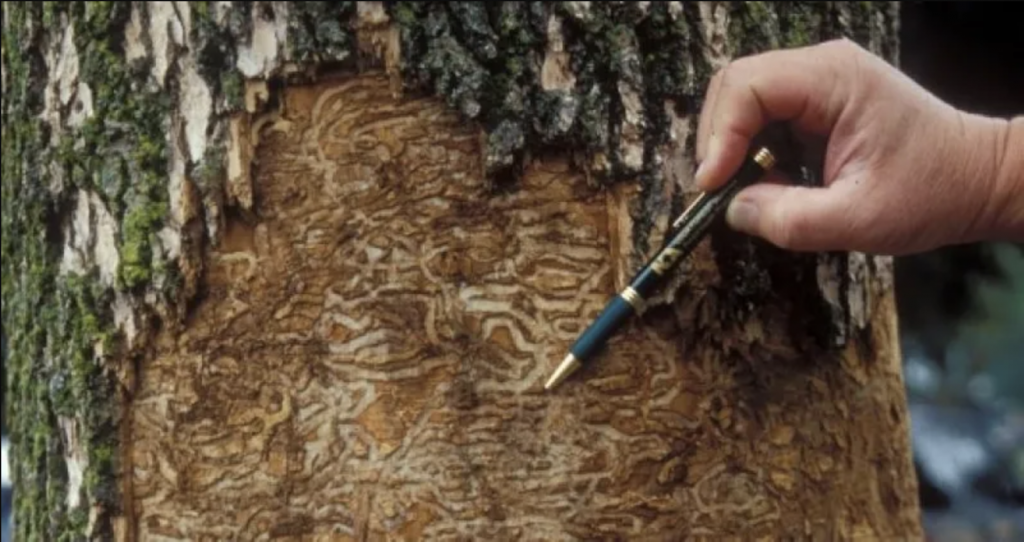
- The larvae feed on the inner bark. The web of paths that they cut as they feed disrupts the movement of water and nutrients up through the trees vascular system, which starves the tree.
- The borers tend to start at the top of the tree and work their way down. By the time they exit the tree leaving their signature “D” shaped exit hole it is likely too late to save the tree.
Tree Removal :
- Trees not treated should be removed if near property or people. Trees that are infected and die become brittle and dangerous.
How to identify an Ash tree?
- Ash species have opposite branches and leaves and a compound leaf with 5-11 leaflets. The bark has a unique diamond-shaped ridge bark on older trees, but younger trees may have smoother bark.
CONTACT US FOR A FREE EVALUATION OF YOUR ASH AND OTHER TREES
Why Is Early Treatment Important for Tree and Shrub Diseases?
Trees and shrubs around Bernardsville can face different health pressures as New Jersey moves from cool, wet spring conditions into warmer summer weather. Fungal diseases and insect activity may develop seasonally, making early identification particularly important for protecting established landscapes.
Harmony Tree Care’s Plant Healthcare Program takes a proactive approach, typically using four visits to address tree and shrub diseases and insect infestations. The company also notes that antifungal treatments often need to be applied early in the season to be effective.
This can be especially important for valuable ornamental plants such as boxwoods. Boxwood blight has been present in the area since 2011, and boxwoods can also be affected by insects and other pathogens. Monitoring plants throughout the growing season allows problems to be identified sooner so treatments can be based on the actual condition affecting the landscape rather than waiting until significant decline is visible.
